Headless Commerce: When It Actually Makes Sense
When headless commerce architecture actually makes sense for your business. Cut through the hype and understand the real trade-offs and requirements.
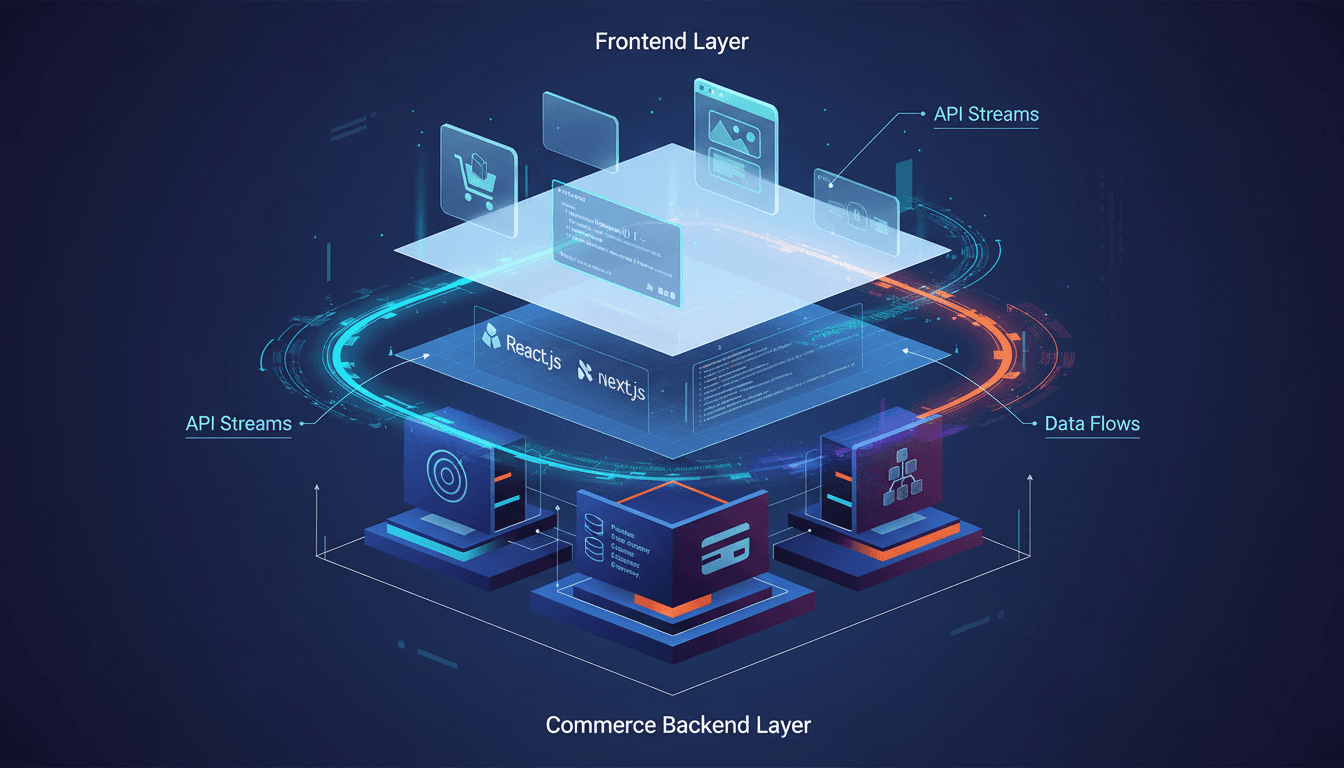
Headless commerce is the architecture where your storefront is decoupled from your commerce backend. The backend handles products, inventory, and orders. A separate frontend handles the customer experience. They communicate through APIs.
The pitch is compelling: unlimited frontend flexibility, better performance, modern developer experience. The reality is more nuanced. Headless commerce adds complexity that only pays off in specific scenarios.
Most e-commerce stores don't need headless. They need to sell products. Shopify or a similar platform does that well without the overhead.
This guide covers when headless commerce creates genuine value, when it creates unnecessary complexity, and how to evaluate which camp you're in.
What Headless Commerce Actually Is
Traditional e-commerce platforms couple the frontend (what customers see) to the backend (product data, inventory, orders, payments). Change the frontend and you're working within the platform's theming system. The platform controls both layers.
Headless commerce decouples these layers:
The commerce backend handles product information management, inventory tracking, cart and checkout logic, order processing, customer accounts, and payment orchestration.
The frontend handles user interface and design, content presentation, user experience flows, performance optimization, and integration with other experiences (app, in-store).
They connect through APIs. The frontend requests data from the backend. The backend processes transactions initiated by the frontend.
When Headless Commerce Creates Value
Headless isn't inherently better or worse. It's appropriate in specific scenarios.
Scenario 1: Your Frontend IS the Product
Some businesses compete on experience, not just products. The storefront experience is the competitive advantage. Product visualization is complex (3D, AR, configurators), content and commerce are tightly integrated, customer journey is non-linear and personalized, and experience must match specific brand standards platforms can't achieve.
Scenario 2: Omnichannel Commerce
If you sell through multiple channels that need unified commerce logic, headless provides consistency. Web storefront, native mobile app, in-store kiosks, social commerce integrations, and marketplace integrations all benefit from centralized commerce while customizing each channel's experience.
Scenario 3: Complex Content Commerce
When editorial content and commerce are deeply integrated, traditional e-commerce platforms struggle. Magazine-style content drives product discovery, content pages need commerce widgets embedded throughout, storytelling is central to the brand experience, and SEO depends on content, not just product pages.
Scenario 4: Performance-Critical Commerce
Page speed affects conversion. Mobile performance especially impacts revenue. If you're in a competitive market where milliseconds matter, headless can help through static generation for product pages, edge caching for API responses, no platform JavaScript overhead, and optimized builds without platform constraints.
When Headless Commerce Creates Complexity Without Value
Headless adds cost and complexity. That's worth it when you get value. Otherwise, it's overhead.
You're Selling Standard Products - If you're selling products at prices with standard cart and checkout, platforms do this well. A Shopify store launches in days. A headless store takes weeks or months.
You're Resource-Constrained - Headless requires frontend development capacity, backend integration expertise, DevOps for deployment and monitoring, and ongoing maintenance of both layers. Platforms bundle this.
Your Differentiator Isn't Experience - Some businesses compete on product uniqueness, price, marketing, customer service, or brand story. The storefront experience is a means to an end, not the competitive advantage.
You're Just Starting - Early-stage commerce needs to validate demand, not optimize experience. Shopify gets you selling in a week. Headless gets you selling in months.
The Hidden Costs of Headless
Headless advocates often undersell the ongoing costs.
Development Costs: Everything the platform gives you, you build. Product pages, collection pages, cart, checkout, account pages, order history, search, filtering—all require development. A reasonable headless MVP takes 8-16 weeks. A comparable Shopify store takes 2-4 weeks.
Maintenance Costs: API versioning, security updates, performance monitoring, and feature additions require integration work rather than app installation. Budget 10-20% of initial development annually for maintenance.
Operational Costs: Frontend hosting ($50-500+/month), commerce backend subscription, CDN and caching, monitoring—compare to Shopify's $79-299/month that includes hosting, security, and basic monitoring.
Decision Framework: Should You Go Headless?
Question 1: Is the Frontend Experience a Competitive Advantage? If customers choose you because of how the site works, headless might be worth it. If customers choose you for products, prices, or brand—platforms suffice.
Question 2: Do You Have the Resources? Headless requires frontend developers comfortable with React/Next.js, API integration experience, DevOps capacity, and ongoing maintenance capacity.
Question 3: What's Your Timeline? Launching in 2 weeks: Platform only. Launching in 2-3 months: Headless is feasible. Already launched and rebuilding: Headless can work as a considered migration.
Question 4: What's Your Budget? Platform MVP: $5,000-25,000. Headless MVP: $50,000-150,000. The delta buys you flexibility. Is that flexibility worth the premium for your business?
Key Takeaways
Headless commerce decouples your frontend from your commerce backend. This creates flexibility but adds complexity.
Headless makes sense when:
- The frontend experience is a competitive advantage
- You're selling across multiple channels that need unified commerce
- Content and commerce are deeply integrated
- Performance optimization beyond platform limits matters
- Your team and resources support the complexity
If you're unsure: Start with a platform. Validate the business. You can migrate to headless when constraints emerge and resources exist. Starting headless and migrating to a platform is rare—usually because headless complexity wasn't justified.
Headless commerce is powerful when it matches your business needs. At NextBuild, we build headless commerce experiences using Next.js and modern commerce APIs when the use case justifies it—and recommend platforms when they don't.