HIPAA-Compliant MVP Development: The Complete Guide
Navigate HIPAA requirements while building your healthtech MVP. Learn which safeguards are essential from day one and how to avoid costly compliance retrofits.
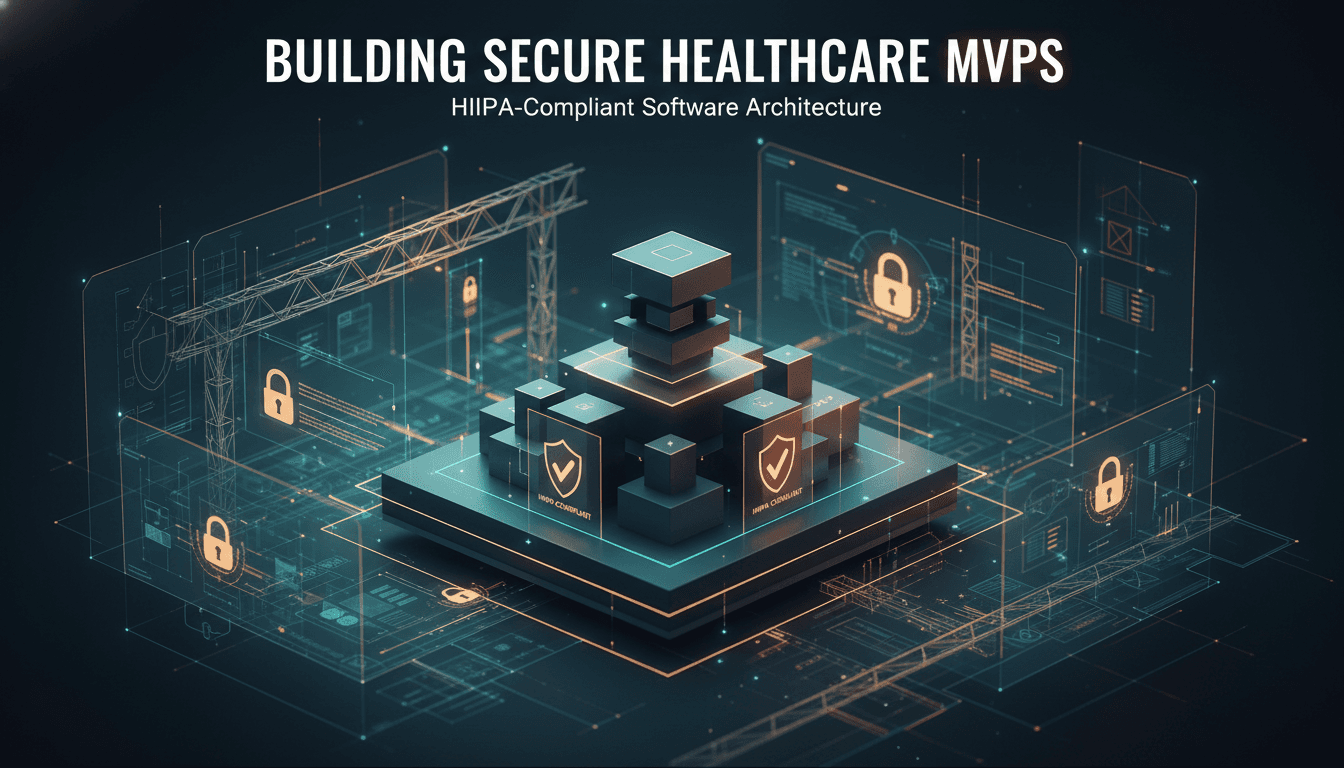
Building a healthtech MVP without HIPAA compliance is like building a house without a foundation. You might move faster initially, but you'll tear everything down when regulations catch up.
The difference between HIPAA-first and HIPAA-later development is stark: 20-30% extra upfront investment versus 150-300% rebuild costs. We've seen startups burn through six months of runway retrofitting compliance into systems that should have been built right from the start.
This guide covers the architecture decisions, vendor choices, and implementation patterns that let you build fast while staying compliant. The goal isn't to make you a HIPAA expert. It's to help you make smart technical decisions so you don't face the rebuild cycle later.
Why HIPAA Compliance Must Be Foundational
HIPAA isn't a feature you add. It's a structural requirement that affects every layer of your application.
The regulations cover two categories: Protected Health Information (PHI) - any individually identifiable health information, and Electronic PHI (ePHI) - PHI stored or transmitted electronically. This is what your application handles.
When you handle ePHI, you become a "covered entity" or "business associate" under HIPAA. This triggers specific requirements: Technical safeguards (encryption, access controls, audit logging), Administrative safeguards (policies, training, risk assessments), and Physical safeguards (facility access, device controls).
The HIPAA-Compliant Architecture Stack
A compliant architecture starts with the right infrastructure choices. Use a cloud provider with a signed Business Associate Agreement (BAA). AWS, Google Cloud, and Azure all offer BAAs. For databases, verify BAA availability and encryption capabilities before committing. Convex provides encryption at rest by default and maintains comprehensive audit trails.
Data Classification: Not All Data Is Equal
HIPAA applies to PHI, but not all data in your application is PHI. Build a clear data classification system: Tier 1 (Public Data) requires no special restrictions. Tier 2 (Internal Data) needs standard access controls. Tier 3 (PII) requires encryption and retention policies. Tier 4 (PHI) needs full HIPAA controls including comprehensive audit logging and BAAs with any touching vendor.
Building Audit Logging From Day One
HIPAA's "accounting of disclosures" requirement means you need to know every time PHI was accessed, by whom, and why. For every PHI access, capture: Who (User ID, service identity, IP address), What (Record type, record IDs, specific fields accessed), When (Timestamp with timezone), How (API endpoint, access method, client type), and Why (Business context).
Audit logs must be retained for six years under HIPAA. Plan your storage accordingly. These logs should also be tamper-evident.
The Minimum Viable Compliance Features
Your MVP must include: Multi-factor authentication, role-based access control, session management, password policies, encryption at rest (AES-256), encryption in transit (TLS 1.2+), key management, backup encryption, comprehensive audit logging, log retention (six years minimum), intrusion detection, incident alerting, user management, access reviews, data export, and breach notification systems.
Vendor Selection: The BAA Requirement
Every vendor that touches PHI must sign a Business Associate Agreement. No exceptions. Critical vendors requiring BAAs include: Cloud infrastructure, database provider, authentication provider, email/SMS provider, analytics tools (if receiving PHI), and error tracking.
Common HIPAA MVP Mistakes
Mistake 1: Treating HIPAA as a Checkbox - Build processes, not just features. Mistake 2: Over-Sharing PHI - Apply "minimum necessary" from the start. Mistake 3: Ignoring Mobile Considerations - Device encryption, secure storage, and remote wipe capabilities matter. Mistake 4: Underestimating Documentation - Start documenting early. Mistake 5: No Breach Response Plan - Have a plan before launch.
Timeline Expectations
Building with compliance from day one adds time upfront but saves time overall. Architecture and Planning: +2 Weeks. Core Development: +20-30%. Security Testing: +1-2 Weeks. A 6-week MVP becomes 8-10 weeks with proper HIPAA compliance. This is significantly faster than building a 6-week non-compliant MVP, then spending 4-6 months retrofitting compliance.
Key Takeaways
HIPAA compliance isn't optional for healthtech, and it's not something you add later. Building compliance into your architecture from day one is the only approach that doesn't result in painful, expensive rebuilds.
- Classify your data from the start. Know what's PHI and treat it accordingly.
- Choose infrastructure with BAAs. Your cloud provider, database, auth provider all need signed BAAs.
- Build audit logging into your data layer. Every PHI access creates an audit record.
- Apply minimum necessary access. Users see only the PHI required for their function.
- Document as you build. Policies and procedures are easier during development than later.
At NextBuild, we build healthtech MVPs with HIPAA-compliant architecture from the first line of code. If you're building a healthtech product and want to avoid the compliance retrofit cycle, let's discuss your project.