MX vs Finicity vs Akoya: Choosing a Financial Data Aggregator
Plaid dominates financial data aggregation conversations, but MX offers superior data enrichment, Finicity excels at lending workflows, and Akoya provides the cleanest regulatory story.
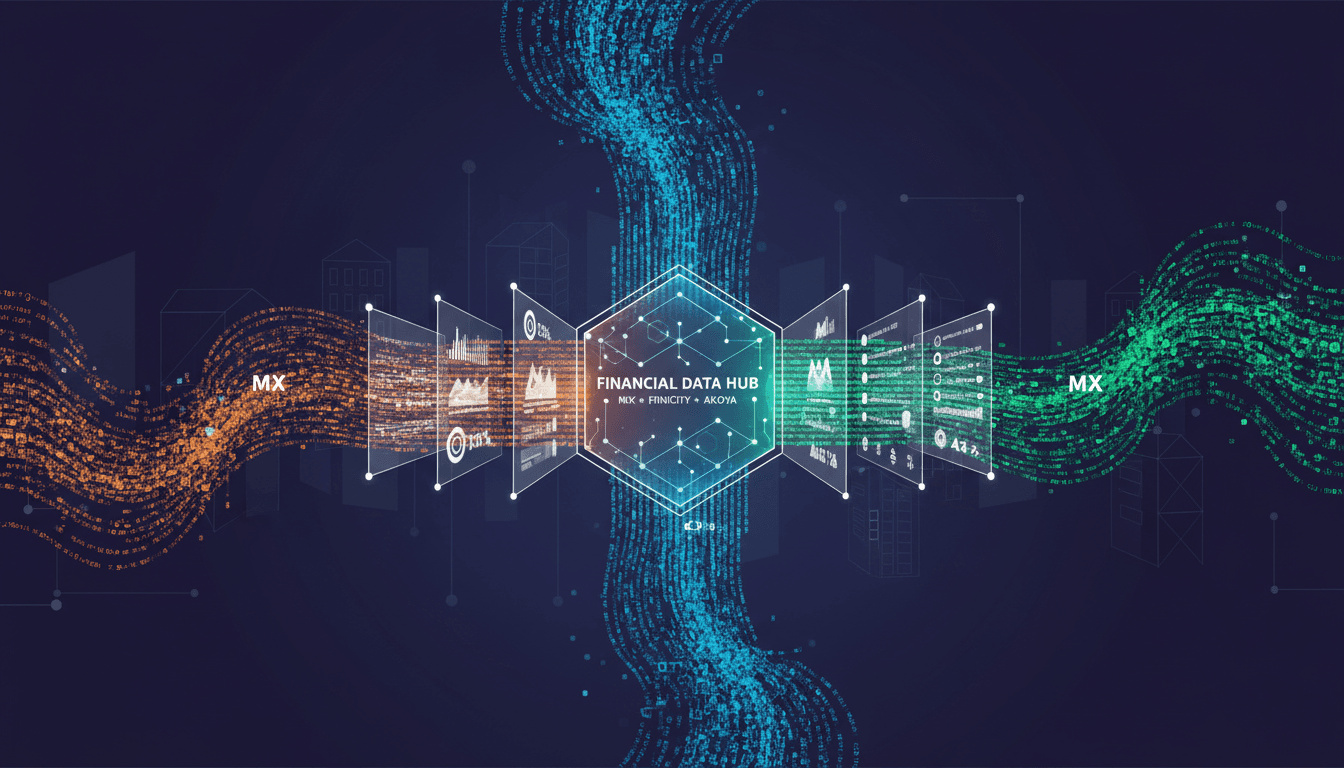
Plaid dominates the conversation around financial data aggregation, but it's not always the right choice. MX offers superior data enrichment. Finicity excels at lending workflows. Akoya provides the cleanest regulatory story. Each serves different product needs.
The wrong choice creates friction you'll live with for years. Integration costs run $10,000-$40,000 depending on complexity, and switching aggregators mid-product means rebuilding core infrastructure.
What Financial Data Aggregators Actually Do
Financial data aggregators handle account linking, data retrieval, data normalization, data enrichment, and connection maintenance. The quality of each function varies dramatically between providers.
MX: Best for Data Enrichment and Insights
MX Technologies has positioned itself as the data quality leader in the aggregation space. MX's machine learning categorization is widely considered the best in the industry. Transaction descriptions like "CHECKCARD 0429 AMZN MKTP US" become clean merchant names with accurate categories.
Coverage includes over 15,000 financial institution connections across the US and Canada. Custom pricing based on connection volume runs $15,000-$90,000 annually depending on scale and features.
Finicity: Best for Lending and Verification
Finicity, acquired by Mastercard in 2020 for $825 million, specializes in lending workflows. If your product involves income verification, asset verification, or credit decisioning, Finicity has purpose-built solutions.
Coverage includes 15,000+ financial institution connections in North America with 95% coverage of US deposit accounts and wealth management accounts. Usage-based pricing with pay-as-you-go options available.
Akoya: Best for Regulatory-Forward Architecture
Akoya represents a fundamentally different approach to data aggregation. Founded in 2018 and jointly owned by 12 major banks including JPMorgan Chase, Bank of America, Wells Fargo, and Capital One, Akoya is 100% API-connected with no screen scraping.
Every connection goes through bank APIs, not credential harvesting. This matters as regulations like CFPB Section 1033 push the industry toward consumer-permissioned, API-based access.
The CFPB Section 1033 Factor
The regulatory landscape is shifting. The CFPB's Section 1033 rule originally required API-based, consumer-controlled data access starting in 2026 for large institutions. While currently under reconsideration, the direction is clear: screen scraping is dying.
Decision Framework
Choose MX If: Your product relies on transaction categorization. Budgeting apps, spending analyzers, or financial dashboards need clean, accurate categories.
Choose Finicity If: You're building lending or credit products. Income verification, asset verification, and cash flow analysis are Finicity's specialty.
Choose Akoya If: Regulatory compliance is your priority. The 100% API-connected model is where regulations are heading.
Key Takeaways
MX leads on data enrichment and categorization quality. Choose it when transaction data quality directly impacts user experience.
Finicity excels at lending and verification workflows. Choose it when accuracy for financial decisions matters most.
Akoya offers the cleanest regulatory story with 100% API connections. Choose it when compliance positioning and enterprise credibility are priorities.