WorkOS Authentication: When Enterprise SSO Matters
When to choose WorkOS over Clerk for authentication. Enterprise SSO, directory sync, and the real requirements that drive the decision.
We've implemented authentication in dozens of startup products. For consumer-facing apps, we use Clerk. For products targeting enterprise customers, we use WorkOS.
The decision point is simpler than most teams realize: if your customers will require SAML SSO, directory sync, or SCIM provisioning, start with WorkOS. If not, Clerk is faster to implement and more feature-rich for consumer use cases.
What Enterprise SSO Actually Means
Enterprise Single Sign-On allows employees to log into your product using their company's identity provider—Okta, Azure AD, Google Workspace, or similar systems.
For the employee: One password, automatic access, session management, compliance through approved corporate systems.
For the enterprise IT team: Centralized control, instant deprovisioning, audit trails, policy enforcement.
For your startup: Larger deals, faster onboarding, reduced support, security compliance.
When SSO Becomes Non-Negotiable
Most B2B startups can launch without enterprise SSO. Small teams and individual buyers use email/password or social login. The question is when SSO becomes blocking.
The Triggers
- Security questionnaires: Enterprise procurement sends a security assessment. "Do you support SAML SSO?" is on every one.
- Buyer requirements: Mid-market and enterprise companies increasingly mandate SSO for any tool touching employee data.
- Deal size thresholds: Deals above $50k-100k annual contract value typically involve IT and security review.
- Regulated industries: Healthcare, finance, and government buyers often require SSO regardless of deal size.
Why WorkOS Over Building Custom
Implementing SAML SSO from scratch requires understanding SAML protocol, handling multiple identity providers, building admin UI, implementing directory sync, and managing session federation. This easily takes 4-8 weeks of engineering time.
WorkOS provides pre-built integrations, admin portal, directory sync, audit logs, and compliance features. The implementation takes 4-8 hours for basic SSO.
WorkOS vs. Clerk: The Decision Framework
Both WorkOS and Clerk provide authentication. They solve different problems.
Choose Clerk when:
- Your users are consumers or individual buyers
- You don't anticipate enterprise sales in the next 12-18 months
- Social login and passwordless are primary authentication methods
- You want the fastest possible implementation
Choose WorkOS when:
- You're targeting mid-market or enterprise customers
- SSO requirements are likely within your sales timeline
- Directory sync for user provisioning is valuable
- Your customers have IT teams managing access
Implementing WorkOS in Next.js
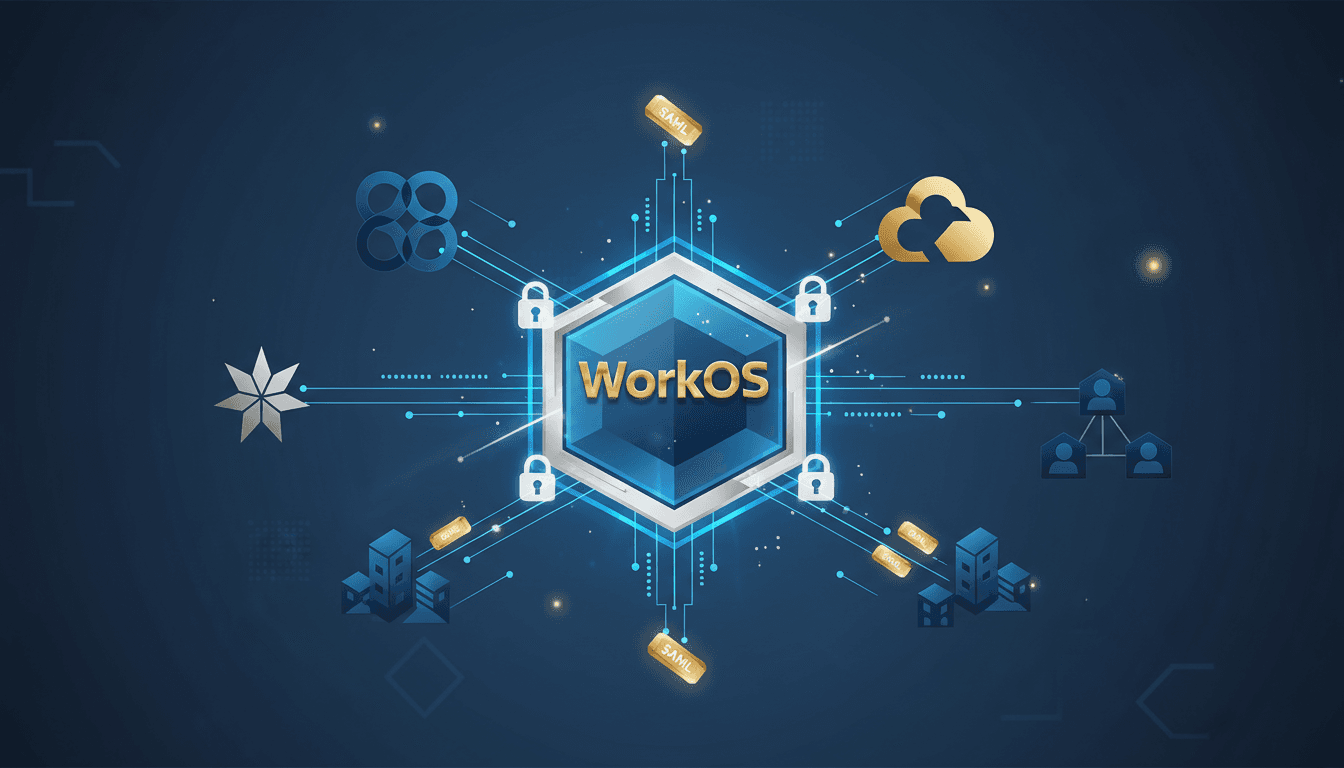
WorkOS integrates cleanly with Next.js. The basic flow involves redirecting to WorkOS, which redirects to the customer's identity provider, then back with authentication data.
Directory Sync Setup
Directory sync allows your customers' IT teams to provision and deprovision users automatically. WorkOS handles the SCIM protocol. You implement webhooks to respond to events like user creation, deletion, and updates.
The Admin Portal Experience
WorkOS provides a self-service admin portal for your customers. Without it, every new enterprise customer requires back-and-forth configuration. With it, customer IT teams configure their identity provider directly and test the connection themselves.
The admin portal is branded with your product. Customers see your logo, not WorkOS. This self-service capability becomes essential as you scale past 5-10 enterprise customers.
SOC 2 and Compliance Benefits
Enterprise SSO isn't just about convenience. It's a security control that compliance frameworks expect. SSO supports SOC 2 control areas including access control, logical access, and user termination. Having SSO capability makes SOC 2 preparation significantly easier.
Key Takeaways
Enterprise SSO is a requirement, not a feature, for B2B startups targeting mid-market and enterprise customers.
When to use WorkOS: Enterprise customers are your target market, SSO requirements are on your roadmap, directory sync provides operational value, you want self-service SSO configuration for customers.
When to use Clerk: Consumer or SMB market focus, enterprise deals aren't on the near-term horizon, maximum speed to initial implementation.
Implementation realities: Basic SSO takes hours with WorkOS, directory sync adds a few more hours, admin portal removes ongoing configuration burden, compliance benefits extend beyond authentication.
The decision isn't technically complex. It's a market positioning question. Know your customer, and the authentication choice follows.
At NextBuild, we implement enterprise-ready authentication as part of our MVP development process. If you're building a B2B product and need to plan for enterprise customers, let's discuss your authentication requirements.